Access without identity fails
People can be invited in and still never feel they belong there.

Designing systems that empower future innovators through AI-driven identity.
Manifesto
We’ve spent years expanding access to technology. But access alone has never been enough.
The future of technology is not just about innovation—it’s about inclusion. But to create a truly equitable tech landscape, we need to rethink who gets to innovate and shape our world. I believe identity is the missing key to this transformation.
I’ve spent years studying how technology and identity intersect—and how, without a solid foundation of self-awareness, innovation can be limited by systemic bias and exclusion. My mission is to design systems that give every individual access to the tools they need to thrive and create without limitations.
This isn’t just about inclusion for the sake of diversity—it’s about redefining who belongs in the future of tech. The work I do builds an infrastructure that ensures everyone has the opportunity to innovate and shape their future.
Introducing a new paradigm
A structured system designed to embed identity development into the future of technology.
If we want to change who participates in technology, we must first change who people believe they can become.
Movement Entry Point
Becoming Phenomenal is a movement to redefine how identity is built in the age of AI. It is for individuals navigating change, organizations shaping talent, and leaders responsible for outcomes.
Category Claim
Identity determines how people respond to challenge, interpret opportunity, and persist through uncertainty. In the age of AI, identity is no longer shaped by people alone. It is shaped by systems.
The Breakthrough
This model defines how identity is built, influenced, governed, and measured in AI-driven environments.
Selected Element
The identity core anchoring confidence, self-concept, belonging, and long-term possibility across the full system.
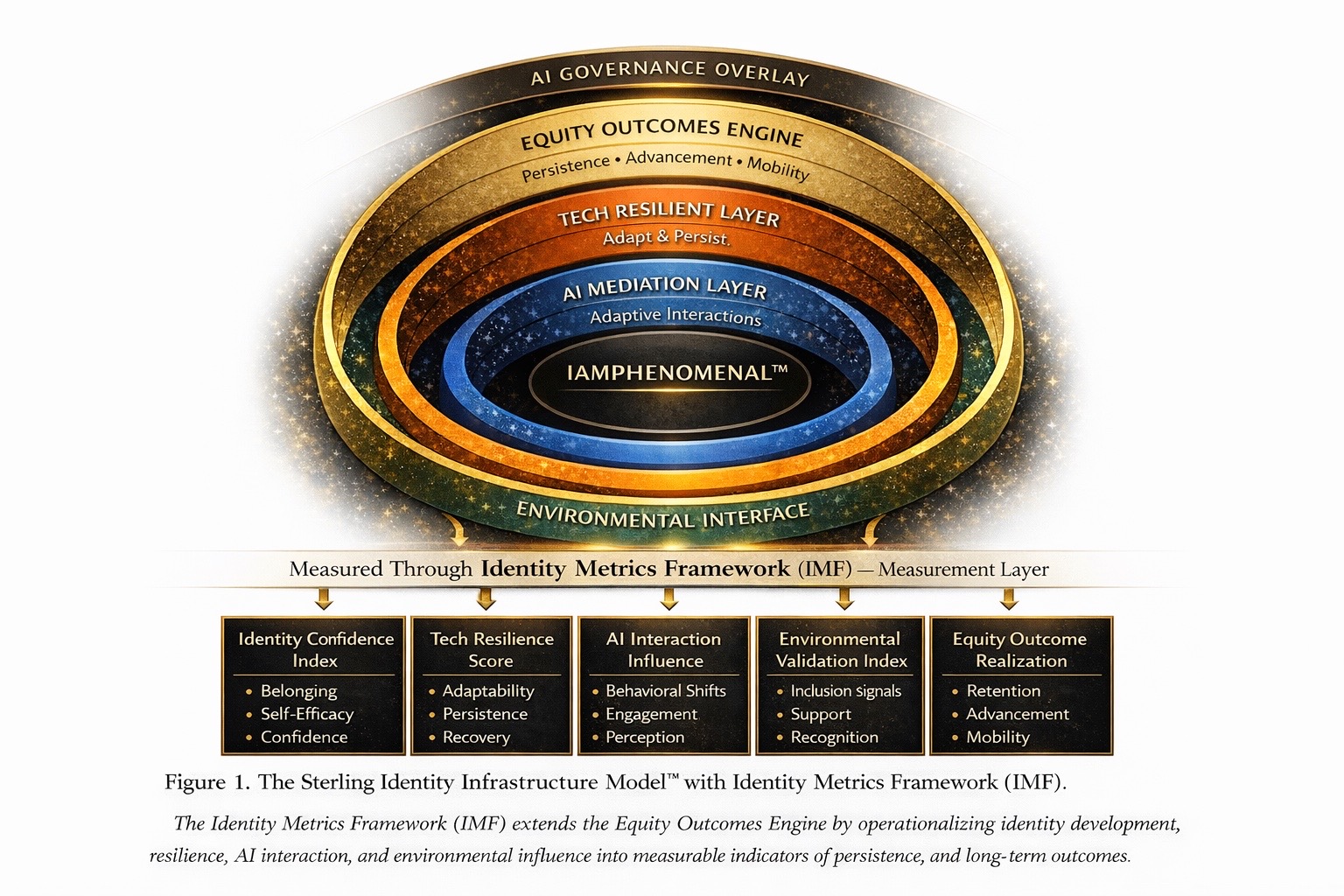
Why This Matters Now
We are watching talent exist and not scale. We are watching systems expand and outcomes remain unequal. The problem is not access. The problem is identity.
People can be invited in and still never feel they belong there.
Technology evolves faster than identity adapts, creating breakdown in persistence and confidence.
Identity-shaping systems left unguided can reproduce instability, inequity, and long-term harm.
A glimpse into how these ideas show up on stage
Perspective-shifting talks designed for universities, conferences, innovation platforms, and leadership audiences ready for a more powerful conversation around technology, identity, and the future of work.
A new theory of equity in the age of artificial intelligence.
For decades, we’ve treated access as the solution to inequality in technology. But access alone has never been enough—and in the age of artificial intelligence, that gap is only widening. This keynote introduces identity as the missing system behind participation, persistence, and leadership in technology.
A new framework for understanding why access alone fails—and how identity must become the foundation of lasting equity in technology.
The missing system behind performance, persistence, and possibility.
We often describe identity as mindset or confidence—but what if it is something far more structural? This keynote reframes identity as infrastructure: a system that shapes how individuals show up, persist, and lead in evolving environments.
A powerful shift from viewing identity as mindset to recognizing it as a system that can be intentionally built, strengthened, and sustained.
The real shift isn’t technology. It’s identity.
As artificial intelligence reshapes work and learning, the biggest transformation is not technological—it is human. This keynote challenges the dominant narrative around AI and reframes preparation for the future as an identity shift, not just a skills upgrade.
A clear lens for navigating the future of AI—where success is defined not just by what you can do, but by who you are becoming.
What happens in the room matters just as much as what is said.
These experiences are not designed to simply inform—they are built to shift how audiences think, speak, and act in the context of identity, technology, and the future of work.
Audiences are challenged to move beyond familiar narratives about technology, equity, and success—replacing them with a more precise, systems-level understanding of what actually drives outcomes.
Complex ideas around identity, resilience, and artificial intelligence are translated into clear, structured language—giving leaders and organizations a way to think, communicate, and act with greater clarity.
The experience extends beyond the moment. Audiences leave with a redefined lens—impacting how they approach leadership, participation, and possibility long after the session ends.
"Yasha Sterling delivered a truly impactful experience for our audience. Her ability to connect, challenge perspectives, and build confidence created a lasting shift in the room—one that extended well beyond the session itself."
Together, these works introduce the philosophy and practice behind Yasha Sterling’s growing body of thought leadership—bridging identity, resilience, and systems-level transformation in the age of artificial intelligence.
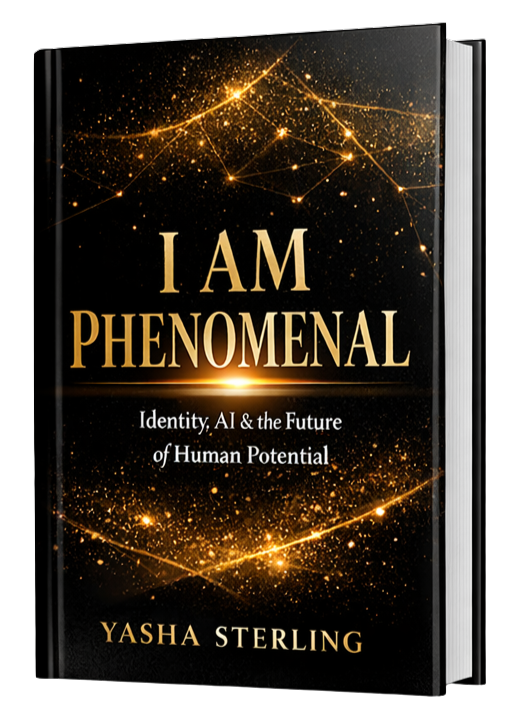
The core framework. The intellectual foundation. The movement in written form.
I Am Phenomenal introduces the central ideas behind Yasha Sterling’s work—reframing identity, equity, and resilience as foundational systems for leadership in the age of AI.
A thought leadership text that defines the vision, language, and framework behind the work.
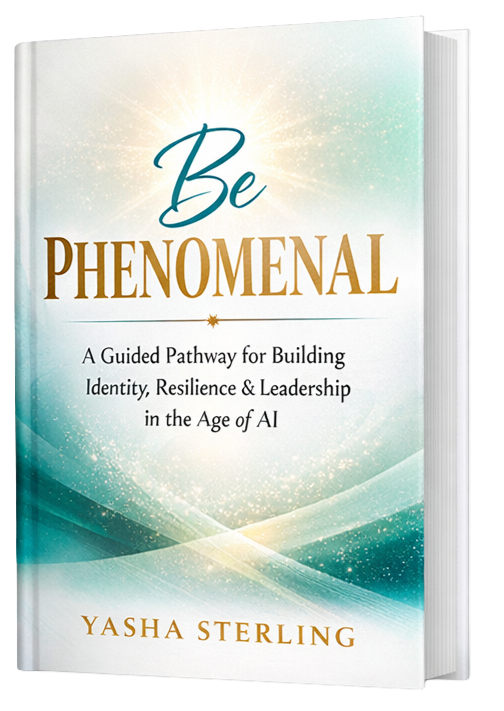
The application layer. The guided practice. The path from idea to embodiment.
Be Phenomenal extends the flagship work into action—offering a more practical, reflective, and guided way to engage the ideas through personal development, identity practice, and deeper integration.
A structured companion experience for applying the ideas in real life and leadership.
From Insight to Impact
Keynotes that challenge how we think about identity, technology, and success.
Framework-driven advisory for organizations navigating AI transformation and human sustainability.
Models and tools that operationalize identity, resilience, governance, and measurable outcomes at scale.
Final Close
The question is not whether systems will shape people. They already are. The question is whether we will design those systems intentionally — or continue reacting to outcomes we do not fully understand.
“The future won’t be won by access. It will be won by identity.”